Living in Boca Raton means dealing with unpredictable summer thunderstorms, extended periods of heavy rainfall, and the possibility of tropical storms or hurricanes. While homeowners often focus on securing windows, clearing gutters, and protecting outdoor furniture, swimming pools require their own preparation. Heavy rain, strong winds, and flying debris can disrupt water chemistry, damage filtration systems, and create safety concerns that remain long after the storm passes. Even a relatively short storm can leave a previously clean pool cloudy, filled with debris, or struggling to maintain proper circulation.
Preparing your pool before severe weather is generally easier and less expensive than addressing preventable problems afterward. However, effective storm preparation involves more than adding chlorine or covering the water. Homeowners need to understand how rainfall affects pool chemistry, which equipment requires attention, why draining a swimming pool can be dangerous, and when professional maintenance becomes necessary. This guide explains practical pool storm preparation in Boca Raton, including the steps to take before heavy rain arrives and how to safely restore your pool after the weather clears.
Pool Storm Preparation in Boca Raton: What Should You Do Before a Storm?
The best way to prepare a Boca Raton swimming pool for a storm is to balance the water chemistry, remove loose objects from the surrounding area, secure pool accessories, and protect electrical equipment from potential flooding. Homeowners should also inspect drainage around the pool and avoid unnecessarily lowering or draining the water.
After the storm, the priority shifts to assessing damage, safely removing debris, checking filtration equipment, and restoring proper water chemistry. The amount of maintenance required depends on rainfall intensity, the amount of debris introduced into the water, the condition of the equipment, and whether contaminated floodwater entered the pool.
Preparing Pool Water Chemistry Before Heavy Rain
One of the most important steps in hurricane pool preparation is making sure your swimming pool has properly balanced water before significant rainfall begins. Rain can dilute pool chemicals, introduce organic contaminants, and alter water conditions. Additionally, leaves, soil, grass clippings, and other debris carried into the pool increase the demand for sanitizer.
Before severe weather arrives, test the pool’s free chlorine, pH, total alkalinity, and stabilizer levels. Correct any existing imbalances according to the pool’s equipment requirements and the chemical manufacturer’s instructions. The CDC’s residential pool water testing guidelines recommend maintaining appropriate chlorine and pH levels to support effective disinfection. Homeowners should not automatically add excessive chlorine or shock treatments simply because a storm is approaching. Chemical adjustments should be based on actual test results and expected operating conditions.
For homeowners unfamiliar with chemical testing, professional Boca Raton pool maintenance can help establish suitable water conditions before significant weather arrives. A properly maintained pool is generally easier to restore after a storm than one already experiencing algae growth, poor circulation, or inconsistent sanitizer levels.
Removing Loose Furniture and Pool Accessories Before a Hurricane
Strong winds can turn seemingly harmless objects into flying debris. Lightweight patio chairs, umbrellas, pool floats, toys, decorative planters, and maintenance accessories may be blown into the pool or against nearby structures. Objects that enter the water can damage finishes, clog skimmers, or interfere with filtration equipment.
The National Weather Service’s hurricane preparedness guidance recommends securing or bringing loose outdoor objects inside before severe weather. Around a swimming pool, homeowners should pay particular attention to the following:
Patio furniture, umbrellas, and cushions that could become airborne.
Pool floats, toys, cleaning brushes, and removable accessories.
Lightweight decorations and unsecured equipment near the pool deck.
Loose branches and vegetation that may fall into the water.
Portable storage containers and maintenance supplies.
Whenever possible, move these items into a garage or another protected location. Avoid placing patio furniture inside the swimming pool as a hurricane preparation strategy. Although sometimes recommended, submerged furniture can stain or scratch pool surfaces, introduce contaminants, and complicate cleanup.
Protecting Pool Pumps, Filters, and Electrical Equipment
Pool equipment is particularly vulnerable during severe weather because many residential systems are installed outdoors. Pumps, filters, automation controls, heaters, and electrical connections may be exposed to wind-driven rain, falling branches, flooding, or power fluctuations.
Before a major storm, identify the appropriate shutoff procedures for your equipment. If flooding, power outages, or electrical damage are possible, follow the manufacturer’s guidance for safely shutting down the system before dangerous conditions begin. Never operate electrical switches while standing in water or handle equipment that may already be submerged. Pool equipment should not be wrapped tightly in plastic or covered in a way that blocks required ventilation, traps moisture, or interferes with safe operation.
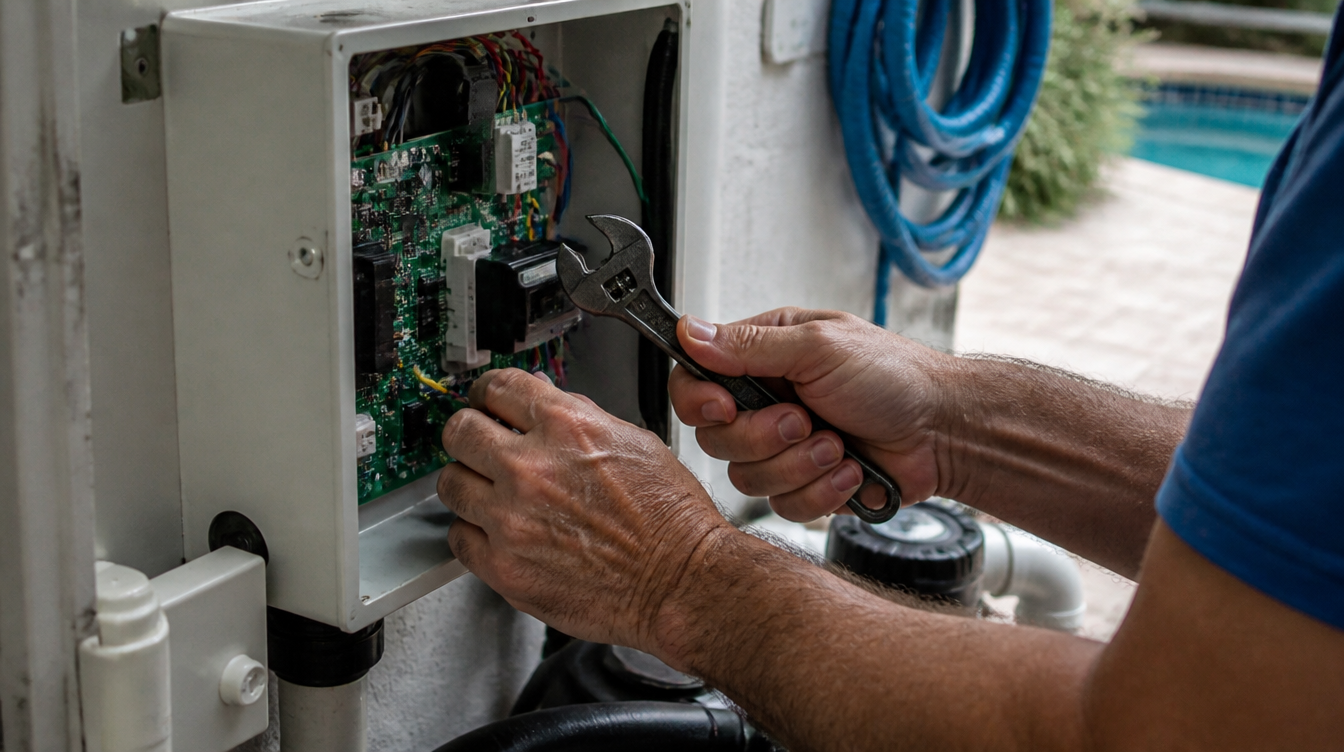
Homeowners with aging pumps, damaged electrical enclosures, or malfunctioning filtration systems may benefit from having their equipment evaluated before hurricane season. Professional pool equipment installation and repair can address existing mechanical problems and determine whether protective improvements are appropriate for the equipment’s location and condition.
Why Florida Homeowners Generally Should Not Drain Their Pool Before a Storm
A common misconception about Florida pool storm preparation is that homeowners should drain their swimming pool before a hurricane to prevent overflowing. In most cases, this is unnecessary and can create additional problems.
Swimming pools are designed to contain substantial amounts of water, and that water plays an important role in maintaining the structural stability of many in-ground pools. In South Florida, where groundwater levels can rise significantly following heavy rainfall, removing too much pool water can increase the risk of structural movement or damage. In extreme circumstances, an improperly drained in-ground pool can lift or shift when surrounding groundwater pressure becomes excessive.
Instead of draining the pool, homeowners should generally maintain the normal operating water level unless a qualified pool professional provides different guidance for the specific pool. If water is already unusually high, consult a professional about an appropriate adjustment. Never assume that emptying the pool is safer simply because heavy rainfall is expected.
Checking Pool Drainage and Surrounding Landscaping
Effective storm preparation also involves evaluating the area surrounding the swimming pool. Rainwater should ideally drain away from the pool rather than carry soil, fertilizer, mulch, or debris directly into the water.
Before heavy rain, check nearby deck drains, landscape drainage channels, and other accessible drainage features for visible blockages. Remove leaves and loose material where it is safe to do so. Homeowners should also pay attention to low-lying landscaping, particularly areas where water frequently collects after thunderstorms.
In Boca Raton, properties with mature vegetation or low-lying sections of yard may experience recurring problems with runoff entering the pool. When this happens repeatedly, additional pool renovation and construction work may be worth evaluating. Depending on the property, improvements to deck drainage, surrounding surfaces, or pool design may help reduce future maintenance problems.
If a hurricane may cause flooding, power interruptions, or electrical damage, follow your equipment manufacturer's storm shutdown instructions. A safe shutdown before dangerous conditions develop may be appropriate. Never operate wet or submerged electrical equipment, and have damaged components inspected before restarting them.
Not automatically. Test your water first and adjust sanitizer levels according to the results and the pool manufacturer's recommendations. Excessive chemical treatment can create additional problems and does not prevent physical debris or stormwater contamination.
Generally, no. Draining an in-ground swimming pool can create structural risks, particularly when surrounding groundwater levels rise. Maintain an appropriate operating water level unless a qualified pool professional recommends otherwise.
Pool Cleaning After a Storm: Removing Debris Safely
Once the storm has passed and local authorities indicate conditions are safe, inspect the pool and surrounding area before beginning cleanup. Leaves, branches, palm fronds, dirt, and other debris can accumulate quickly during strong winds. Removing these materials helps prevent clogged equipment and reduces the amount of organic matter that must be treated in the water.
Start by checking for hazards such as fallen electrical lines, damaged structures, sharp objects, or broken glass. If the area is safe, use a leaf net or skimmer to remove floating debris. Larger branches or heavy objects may require professional assistance, especially if they have damaged the pool surface.
For routine pool cleaning after a storm, homeowners can follow these steps:
Remove floating leaves and loose organic material using a pool net.
Empty accessible skimmer baskets once conditions are safe.
Inspect the water for unusual discoloration or visible contamination.
Check the pool floor for dirt, sediment, and accumulated debris.
Vacuum remaining material after confirming that the filtration system is operating safely.
Clean or service the filter according to manufacturer instructions when necessary.
If floodwater, sewage, or potentially hazardous runoff has entered the pool, ordinary debris removal and chemical adjustment may not be sufficient. The CDC’s floodwater safety recommendations explain why floodwater should be treated as potentially contaminated. In these situations, keep swimmers out and obtain professional guidance before attempting to restore the pool.
Inspecting Pumps, Filters, and Electrical Equipment After the Storm
A pool that looks relatively clean after a storm may still have equipment problems. Flooding, wind-driven debris, electrical surges, and prolonged shutdowns can affect the equipment responsible for circulating and filtering the water.
Before restarting the system, visually inspect accessible components without opening electrical enclosures. Look for displaced equipment, damaged pipes, disconnected fittings, flooding around the pump, or unusual debris inside equipment areas. If the equipment was submerged or appears damaged, do not restart it until a qualified professional determines it is safe.
Once the system has been confirmed safe to operate, monitor circulation and filtration performance. Unusual noises, water leaks, reduced flow, or repeated breaker trips can indicate mechanical or electrical problems requiring attention.
These inspections are particularly important after hurricanes because a damaged system may continue operating inefficiently before the problem becomes obvious. Addressing circulation problems early can help prevent additional water quality issues.
Pool Care After a Hurricane: Restoring Water Chemistry
Heavy rainfall can significantly affect the chemical balance of a swimming pool. After removing major debris and confirming the circulation system is safe, test the water again rather than assuming the pre-storm chemical levels remain accurate.
Pay particular attention to free chlorine, pH, total alkalinity, and stabilizer levels. Rainwater can dilute chemicals, while debris and contaminants may increase chlorine demand. Depending on test results, the pool may need sanitizer adjustments, pH correction, or additional filtration.
Avoid adding multiple chemicals without testing or following appropriate treatment instructions. Some pool chemicals can react dangerously when mixed, and more chemicals do not necessarily produce better results. The CDC’s pool chemical safety recommendations provide useful guidance on safe handling and storage.
If the water remains cloudy or develops algae after treatment, professional residential pool service can help identify whether the underlying issue involves water chemistry, filtration performance, or contamination. Swimming should resume only when water clarity, circulation, and sanitizer conditions are appropriate.
When Should You Contact a Professional Pool Technician?
Not every post-storm pool issue requires a major repair. Minor debris accumulation and modest chemical changes can often be handled through ordinary maintenance. However, some conditions should be evaluated by a qualified professional rather than handled through trial and error.
Professional assistance is particularly important when:
Pool pumps, heaters, or electrical components have been submerged.
Breakers trip repeatedly or equipment produces unusual sounds.
Water levels continue dropping after normal conditions return.
Pool surfaces, tiles, plumbing, or surrounding decking show visible damage.
Floodwater or potentially contaminated runoff has entered the pool.
Water remains cloudy despite appropriate cleaning and treatment.
For example, a pool that continues losing water after a hurricane may have a plumbing leak or structural issue rather than normal evaporation. Professional pool leak detection can help identify whether water loss is associated with damaged plumbing, fittings, or other components.
When electrical hazards are involved, a qualified electrician may also be necessary before repairs or normal operation can resume.
What Affects the Cost and Complexity of Post-Storm Pool Maintenance?
The cost of restoring a swimming pool after severe weather depends on the type and extent of damage. A pool that only needs debris removal and chemical balancing will generally require less work than one with flood-contaminated water, damaged equipment, or structural problems.
Several factors influence the amount of service needed:
Pool size and design: Larger pools, attached spas, and complex water features may require additional cleaning and equipment checks.
Debris accumulation: Large quantities of leaves, dirt, or branches can increase cleanup time.
Equipment condition: Older or previously damaged pumps and filters may be more vulnerable to storm-related failures.
Water contamination: Floodwater or significant runoff can require specialized assessment and treatment.
Access and surrounding conditions: Fallen trees, damaged decking, or inaccessible equipment can delay restoration.
Repair requirements: Electrical work, replacement components, and structural repairs may involve additional labor and applicable requirements.
Service availability may also be affected after major storms, when many properties require attention simultaneously. Homeowners should request an assessment based on their pool’s actual condition rather than assuming every post-storm cleanup requires the same treatment.
Why Consistent South Florida Pool Maintenance Matters During Hurricane Season
Routine maintenance plays an important role in keeping a swimming pool prepared for unexpected weather. A pool with regularly balanced water, clean filtration equipment, and functioning circulation is generally in a better position to recover from heavy rain than one already experiencing unresolved maintenance problems.
For residential properties, weekly maintenance can help identify small issues before storms make them more difficult to manage. Regular inspections may reveal clogged filters, worn seals, unstable chlorine levels, or minor leaks that might otherwise go unnoticed.
The same principle applies to hotels, apartment communities, condominiums, and other shared swimming facilities. These properties may need more structured operational procedures because equipment performance, documentation, water quality, and reopening decisions affect multiple users. Professional commercial pool service can support consistent maintenance and help facility managers address storm-related service needs.
For property managers and maintenance personnel seeking a better understanding of water chemistry and equipment operation, additional pool education and technical guidance can also support safer day-to-day decisions.
Keeping Your Boca Raton Pool Ready for the Next Storm
Preparing a pool for severe weather does not require complicated procedures, but it does require attention to the right details. Balanced water chemistry, secure outdoor accessories, appropriate equipment precautions, and clear drainage can all help reduce avoidable problems. After a storm, careful inspection, debris removal, and water testing provide a practical starting point for restoring normal operation.
For Boca Raton homeowners, the most effective approach combines preparation before storms with ongoing maintenance throughout the year. Whether dealing with an afternoon thunderstorm or a major hurricane, knowing how to protect pool equipment, recognize warning signs, and respond appropriately can make the recovery process safer and more manageable.
If your pool requires storm-related cleanup, equipment inspection, or ongoing care, The Pool Scientist provides residential and commercial pool services in Boca Raton. Professional guidance can help determine what maintenance or repairs are appropriate for your property’s specific conditions.