A pool can remain usable long after it stops performing the way it should. The water may still look reasonably clear, the pump may continue running, and the surface may appear acceptable from a distance. However, Boca Raton homeowners often begin noticing smaller warning signs: water levels that need frequent refilling, rough areas underfoot, discolored finishes, loose tiles, louder equipment, or rising maintenance demands. Individually, these issues may seem manageable. Together, they can indicate that the pool is reaching the point where repairs alone are no longer the most practical solution.
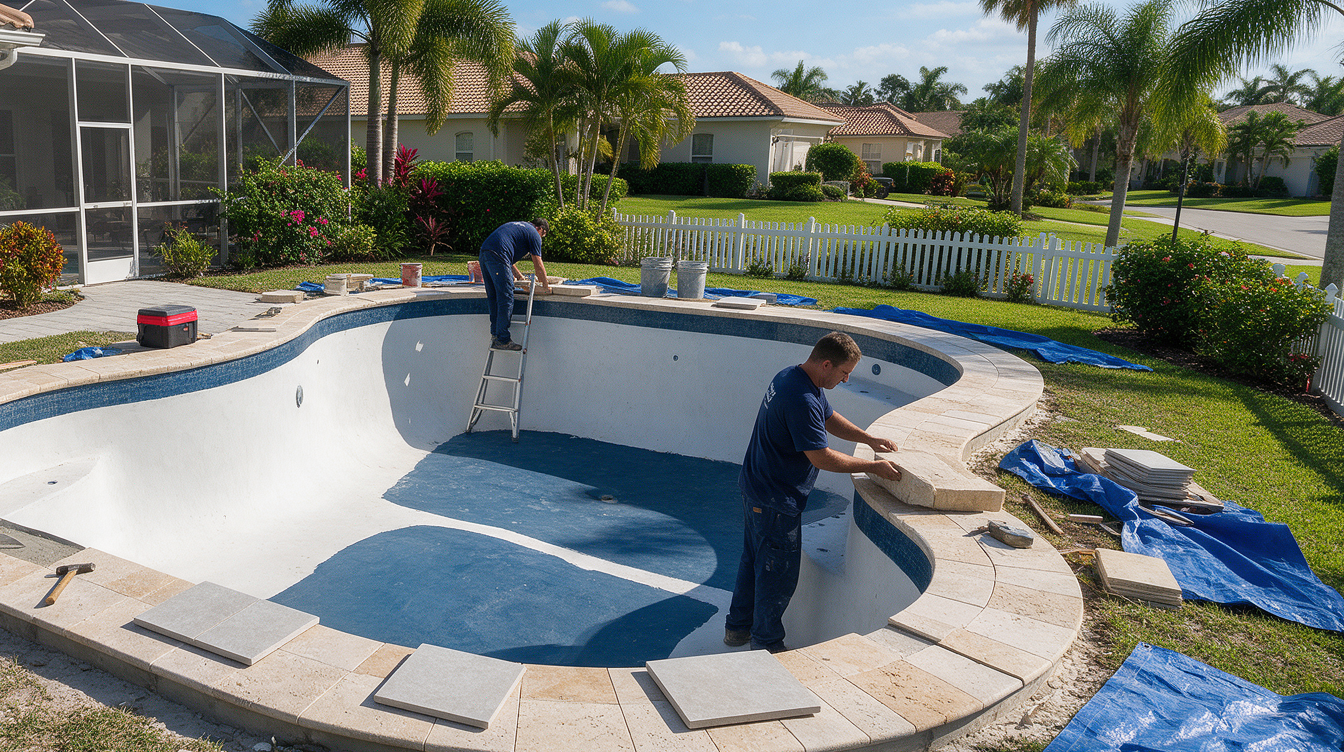
South Florida pools also operate under demanding conditions. Consistent sun exposure, warm temperatures, heavy seasonal rainfall, frequent use, landscaping debris, and year-round equipment operation can all affect pool surfaces and mechanical systems. A renovation does not necessarily mean completely rebuilding the pool. Depending on its condition, the project may involve resurfacing, replacing tile, repairing structural damage, updating equipment, changing the deck, adding new features, or redesigning portions of the pool to better fit how the property is used today.
When Is Pool Renovation in Boca Raton Necessary?
Pool renovation is generally worth considering when the pool has recurring leaks, widespread surface damage, loose or outdated tile, unreliable equipment, inefficient circulation, difficult maintenance, or a design that no longer meets the property owner’s needs. Renovation may also make sense when several repairs are needed at once and coordinating them as one project would produce a better long-term result.
The decision should be based on the pool’s actual condition rather than its age alone. A qualified pool specialist can inspect the shell, finish, tile, plumbing, equipment, drainage, deck, and water condition before recommending a scope of work. Some pools only need resurfacing and equipment updates, while others require more extensive pool remodeling in Boca Raton.
Cracked Surfaces and Pool Leaks Are Major Warning Signs
Small surface imperfections are common, but cracks should not automatically be dismissed as cosmetic. A thin crack in the finish may only affect the surface coating, while a deeper or widening crack could involve the pool shell or surrounding movement. The location, width, pattern, and rate of change all matter. Cracks near fittings, steps, skimmers, returns, lights, or the tile line deserve particular attention because these areas include transitions and penetrations where leaks may develop.
A falling water level is another common reason homeowners begin researching professional pool leak detection. Some water loss is expected from evaporation, splash-out, and backwashing. However, repeatedly adding more water than usual, finding damp areas around the pool, noticing air in the pump system, or seeing unexplained changes in chemical demand may indicate a leak.
Possible warning signs include:
- Cracks that continue to widen or reappear after patching
- Wet soil, settled pavers, or soft areas near the pool
- Water levels dropping consistently when the pool is not being used
- Loose coping or tile near a visible crack
- Air bubbles returning through pool jets
- Unexplained difficulty maintaining water chemistry
- Cracks around the skimmer, steps, drains, or light fixtures
A pool technician can perform pressure testing, dye testing, equipment inspections, and other diagnostic work to identify the source. Renovation may be appropriate when a leak is connected to deteriorated finishes, damaged plumbing, failed fittings, structural movement, or several aging components.
Pool Resurfacing Boca Raton: Outdated Finishes and Tile
A pool finish is exposed continuously to water, chemicals, sunlight, brushing, temperature changes, and normal wear. Over time, the surface may become rough, stained, faded, etched, mottled, or difficult to clean. Swimmers may notice discomfort on their feet or snagged swimwear before the deterioration becomes obvious from the pool deck.
Not every stain requires resurfacing. Organic debris, metals, scale, algae, and water chemistry problems can also discolor a pool. Before recommending a new finish, a pool professional should evaluate whether the appearance can be improved through cleaning, chemical treatment, water balancing, or targeted repair. Resurfacing becomes more reasonable when deterioration is widespread or the finish is beginning to expose the material underneath.
Tile problems often develop at the same time. Missing grout, cracked waterline tile, hollow-sounding sections, sharp edges, or tiles that repeatedly detach may point to movement, installation failure, water intrusion, or age-related deterioration. During pool renovation and construction planning, the pool contractor can determine whether the tile should be repaired selectively or replaced as part of a broader resurfacing project.
Aging Pool Equipment Can Make Maintenance More Difficult
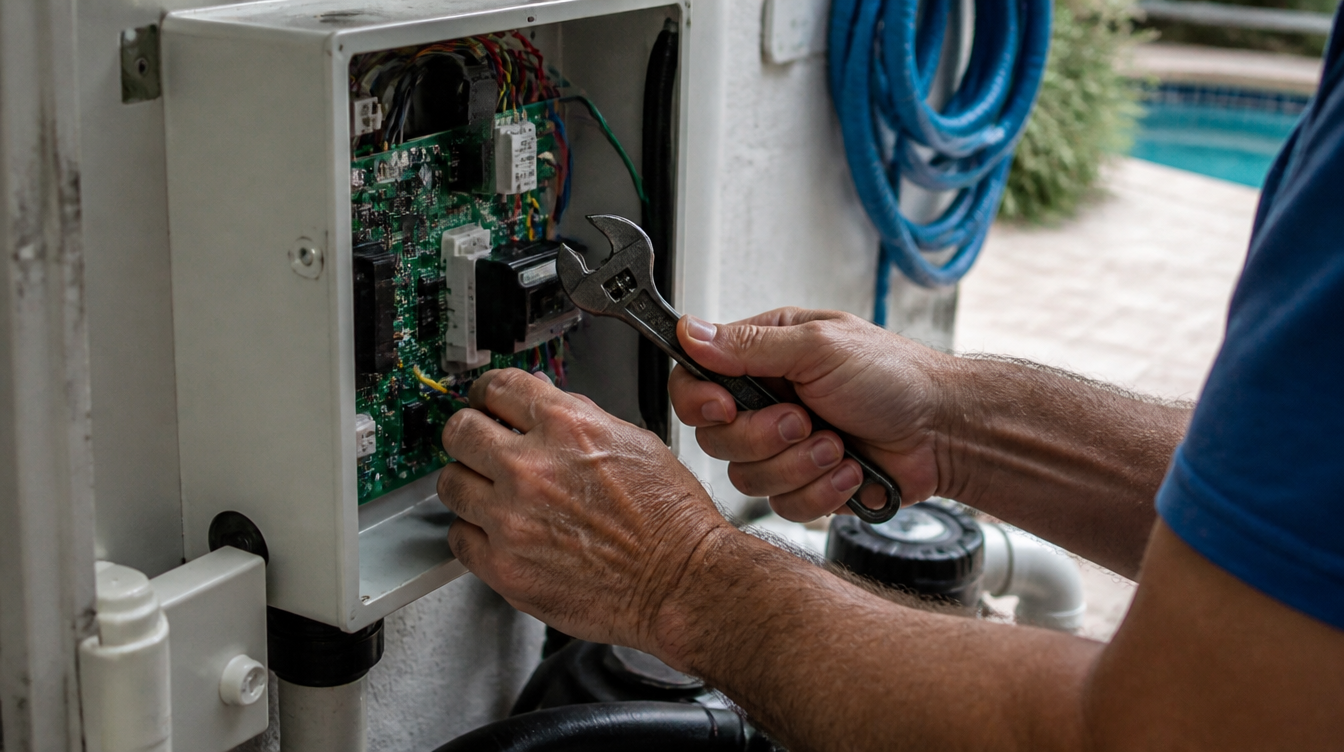
A pool can look attractive while relying on equipment that is becoming increasingly unreliable. Pumps, filters, heaters, automation systems, valves, lights, sanitizing equipment, and control panels all affect water quality and daily operation. When these components age at different rates, pool owners may experience a cycle of isolated repairs without solving the underlying performance problem.
Common equipment warning signs include:
- A pump that is noisy, leaking, overheating, or losing prime
- Weak circulation or inconsistent flow from return jets
- Filter pressure that changes unexpectedly
- A heater that struggles to reach or maintain temperature
- Valves that are difficult to turn or visibly leaking
- Lights that flicker, fail, or collect water
- Controls that no longer communicate reliably
- Equipment that requires frequent resets or service calls
A pool inspection should consider the entire hydraulic system rather than treating every malfunction as an unrelated issue. An oversized pump, restricted plumbing, dirty filter, damaged impeller, incorrect valve position, or poor programming can create similar symptoms. A knowledgeable pool specialist can determine whether repair remains practical or whether pool equipment installation and repair should be included in the renovation.
Energy-Efficiency Upgrades During Pool Remodeling Boca Raton Projects
Renovation provides an opportunity to improve how the pool operates, not just how it looks. Pool equipment is often used for many hours throughout the year in South Florida, so pump selection, scheduling, filtration, hydraulics, heating, lighting, and automation can influence operating costs and equipment strain.
Variable-speed pumps can be programmed to operate at different speeds for filtration, heating, cleaning, and water features. However, installing a new pump without evaluating the existing plumbing and system requirements can lead to poor circulation or unnecessary complexity. The U.S. Department of Energy maintains efficiency requirements and testing information for dedicated-purpose pool pumps, making it a useful resource when comparing equipment.
Other upgrades may include LED lighting, updated automation, more efficient heating equipment, improved filtration, new timers, and better control over water features. The U.S. Environmental Protection Agency also notes that properly used pool covers can reduce evaporation and help retain heat, supporting both water and energy efficiency.
The best equipment package depends on pool volume, plumbing layout, desired water turnover, attached spas, elevation changes, water features, heating preferences, and how the pool is used. More equipment is not always better. Properly matched equipment is usually more important than simply choosing the largest or most feature-rich model.
Modern Pool Design Trends That Improve Everyday Use
Some Boca Raton homeowners pursue renovation because the pool feels visually dated. Others are more concerned with usability. Older pools may have limited shallow space, narrow steps, uncomfortable seating, insufficient lighting, or decking that does not support entertaining, children, pets, or changing mobility needs.
Modern pool renovation trends frequently focus on cleaner lines, larger entry steps, integrated seating, neutral finishes, simplified tile, updated lighting, and better transitions between the pool and surrounding outdoor space. However, design decisions should still be based on the home’s architecture and the owner’s long-term preferences. A highly stylized finish may look current today but may not be as adaptable as a simpler design.
Before finalizing a pool remodeling plan, consider:
- Who regularly uses the pool
- Whether the pool is used for exercise, relaxation, entertaining, or children
- How much direct sun reaches the water
- Whether additional shade or seating is needed
- How the pool looks from inside the home
- Whether the deck becomes slippery, hot, or difficult to maintain
- Which features the owner is realistically willing to maintain
A thoughtful renovation should make the pool easier and more enjoyable to use rather than adding features that create unnecessary maintenance.
There is no universal renovation schedule. The need depends on the finish material, water chemistry, construction quality, equipment condition, maintenance history, sun exposure, usage, and previous repairs. An inspection is more reliable than deciding based only on age.
The scope may include resurfacing, tile and coping replacement, leak repair, deck work, equipment upgrades, lighting, plumbing changes, automation, tanning ledges, spas, water features, or changes to the pool’s shape. The exact work depends on the pool and the owner’s goals.
Permit requirements depend on the property location and scope of work. Structural, plumbing, electrical, deck, barrier, or equipment changes may require review. Confirm requirements with the City of Boca Raton or the applicable Palm Beach County authority before construction.
Luxury Pool Renovation With Tanning Ledges and Water Features
Tanning ledges, sun shelves, fountains, deck jets, waterfalls, bubblers, raised spas, fire features, and decorative lighting can change the appearance and function of a pool. A shallow ledge may create space for in-water seating or supervised play, while a water feature may provide movement and background sound.
These additions require more than visual planning. A tanning ledge changes the pool’s interior geometry and may affect circulation, finish transitions, cleaning, and usable swimming space. Water features can require additional plumbing, pumps, valves, electrical work, waterproofing, drainage planning, and automation. They may also increase evaporation and maintenance needs.
For that reason, a luxury pool renovation should begin with an evaluation of the existing shell and equipment. It is not always practical to add every desired feature to every existing pool. A pool builder or renovation specialist should explain what can be incorporated safely, what structural or hydraulic changes are needed, and whether the result is worth the added complexity.
Renovation ROI for South Florida Homeowners
Pool renovation can support property appeal, but homeowners should be cautious about treating it as a guaranteed financial return. The value of a renovation depends on the property, neighborhood, pool condition, quality of the work, buyer preferences, and whether the upgrades solve meaningful problems.
In many cases, the most practical return comes from correcting visible deterioration and restoring confidence in the pool. A leaking, heavily stained, rough, or nonfunctional pool may raise questions for prospective buyers. Conversely, a well-maintained pool with updated equipment and a cohesive design may make the outdoor area more usable and attractive.
Renovations that tend to provide practical value include:
- Repairing active leaks and structural concerns
- Replacing deteriorated finishes and unsafe tile
- Correcting unreliable circulation or filtration
- Updating visibly worn coping and deck transitions
- Improving lighting and access
- Replacing failing equipment
- Simplifying systems that are difficult to operate
Homeowners considering a future sale may benefit from a pool inspection or professional pool consulting and education before choosing upgrades. The goal should be to correct defects and make sensible improvements, not to assume that every dollar spent will be recovered.
What Affects Swimming Pool Renovation Cost and Timeline?
Swimming pool renovation cost varies because no two existing pools have the same condition, access, design, or equipment. A basic resurfacing project is very different from a renovation involving structural repairs, plumbing changes, new decking, a spa addition, electrical updates, and custom water features.
Major cost and timeline factors include:
- Pool size, depth, shape, and existing construction
- Type and condition of the current finish
- Extent of cracking, leaking, or structural damage
- Tile, coping, and deck materials
- Plumbing and electrical modifications
- Equipment repairs or replacements
- Accessibility for workers, materials, and machinery
- Custom features such as ledges, spas, lighting, or water features
- Inspection, permitting, and approval requirements
- Material availability and project sequencing
- Weather and unexpected conditions discovered after demolition
Permitting requirements can depend on the exact scope and whether the property is within Boca Raton, another municipality, or unincorporated Palm Beach County. Palm Beach County provides building permit forms and residential swimming pool safety information through its Building Division resources. Property owners should confirm requirements with the applicable local authority before work begins.
A trustworthy pool remodeling company should provide a written scope identifying what is included, what is excluded, how hidden damage will be handled, and which selections could change the price or schedule.
When to Contact a Qualified Pool Professional
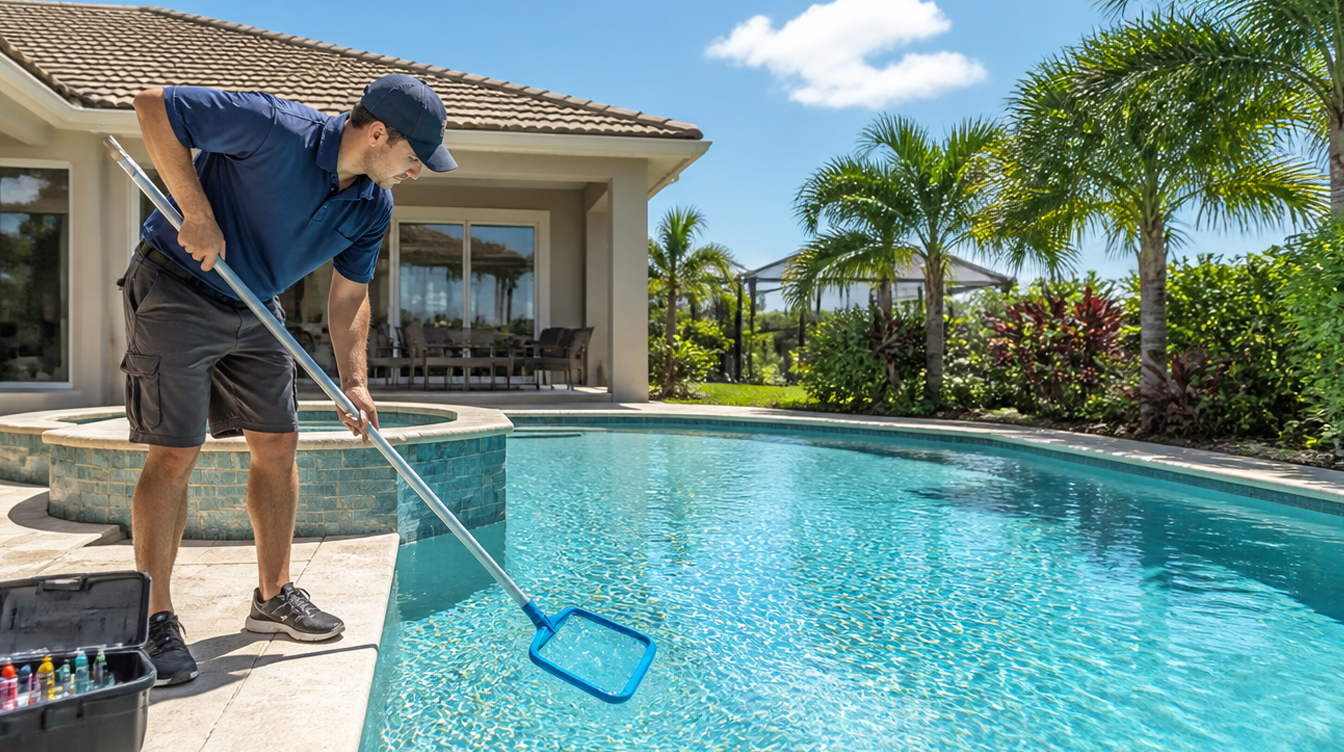
Cosmetic cleaning, routine skimming, and basic water testing may be manageable for some homeowners. Structural cracks, electrical components, active leaks, equipment replacement, chemical problems, suction hazards, plumbing modifications, and major surface work should be evaluated by a qualified pool professional.
Pool chemicals also require careful handling. They should never be mixed casually, and incompatible chemicals can cause dangerous reactions. The CDC’s pool chemical safety guidance explains important precautions involving storage, handling, protective equipment, and chemical feed systems.
Contact a professional promptly when:
- A crack is expanding or appears structural
- Water is collecting around electrical equipment
- A light fixture contains water
- The pump repeatedly loses prime
- The pool is losing a significant amount of water
- The surface has sharp, loose, or crumbling areas
- Chemical levels cannot be stabilized
- Drains, suction fittings, or safety components are damaged
- Equipment is overheating, smoking, sparking, or tripping breakers
Until the issue is evaluated, stop using unsafe equipment and keep swimmers away from damaged areas.
Choosing a Pool Remodeling Company or Pool Contractors Near Me
Searching for “pool contractors near me” may produce many options, but proximity alone does not demonstrate renovation experience. Pool remodeling requires coordination between surface preparation, plumbing, equipment, tile, coping, electrical work, structural changes, water startup, and ongoing maintenance.
Ask prospective providers how they evaluate existing conditions, document the scope, handle hidden damage, coordinate permits, protect the property, and manage the water after startup. It is also reasonable to ask whether the company regularly completes the specific type of pool renovation being considered.
Florida consumers can use the Department of Business and Professional Regulation’s license verification portal to search by name, license number, city, or county and review available license information.
After renovation, proper maintenance remains essential. The CDC recommends routinely monitoring disinfectant and pH levels in residential pools to support healthy swimming conditions. Depending on the property, that may involve homeowner care, residential pool service, or commercial pool service.
Plan Your Pool Renovation Palm Beach County Project Carefully
The clearest sign that a renovation is needed is often not one dramatic failure. It is a pattern of recurring leaks, surface deterioration, unreliable equipment, difficult maintenance, outdated design, or repairs that are becoming increasingly frequent. Addressing these issues together can create a more coordinated result than continuing with isolated fixes.
Before selecting finishes or features, begin with a detailed inspection of the existing pool. A pool contractor should distinguish cosmetic concerns from structural, hydraulic, electrical, and equipment-related problems. Boca Raton property owners who need help evaluating their options can request a pool renovation consultation to discuss the pool’s condition, priorities, and potential scope.