A backyard pool and a hotel, apartment, or community pool may use similar pumps, filters, sanitizers, and cleaning tools, but they are not maintained under the same operating conditions. A homeowner may need help keeping the water clear, removing debris, balancing chemicals, and preventing equipment failures. A commercial property manager must consider those same responsibilities while also managing heavier use, public health requirements, operating records, inspections, resident or guest complaints, and the possibility that an unexpected closure could affect the entire property.
This difference is especially important in Boca Raton and throughout South Florida, where pools are often used for much of the year. Heat, rainfall, landscaping debris, high bather loads, and frequent equipment operation can quickly change water conditions. Whether you are hiring a pool guy for a private residence or evaluating a commercial pool company in Florida for an HOA, apartment community, hotel, or fitness center, understanding the service requirements can help you choose the right level of care.
Residential vs. Commercial Pool Service: The Main Difference
Residential pool service is primarily focused on maintaining a safe, clean, functional pool for one household and its guests. Commercial pool service must support a larger number of swimmers, more demanding equipment schedules, documented operating procedures, applicable health regulations, and greater liability exposure.
Both types of pools need circulation, filtration, sanitation, cleaning, inspections, and equipment maintenance. However, commercial pool maintenance generally requires more frequent monitoring, more detailed records, faster response times, and a pool professional who understands public-pool operations. The exact scope, cost, and service schedule will depend on the pool’s size, condition, location, usage, equipment, regulatory classification, and property requirements.
Residential Pool Service Requirements
A typical residential pool service plan is designed around the needs of a single-family pool. Weekly service is common, although some pools may require additional attention during periods of heavy use, storms, equipment problems, or unusually warm weather.
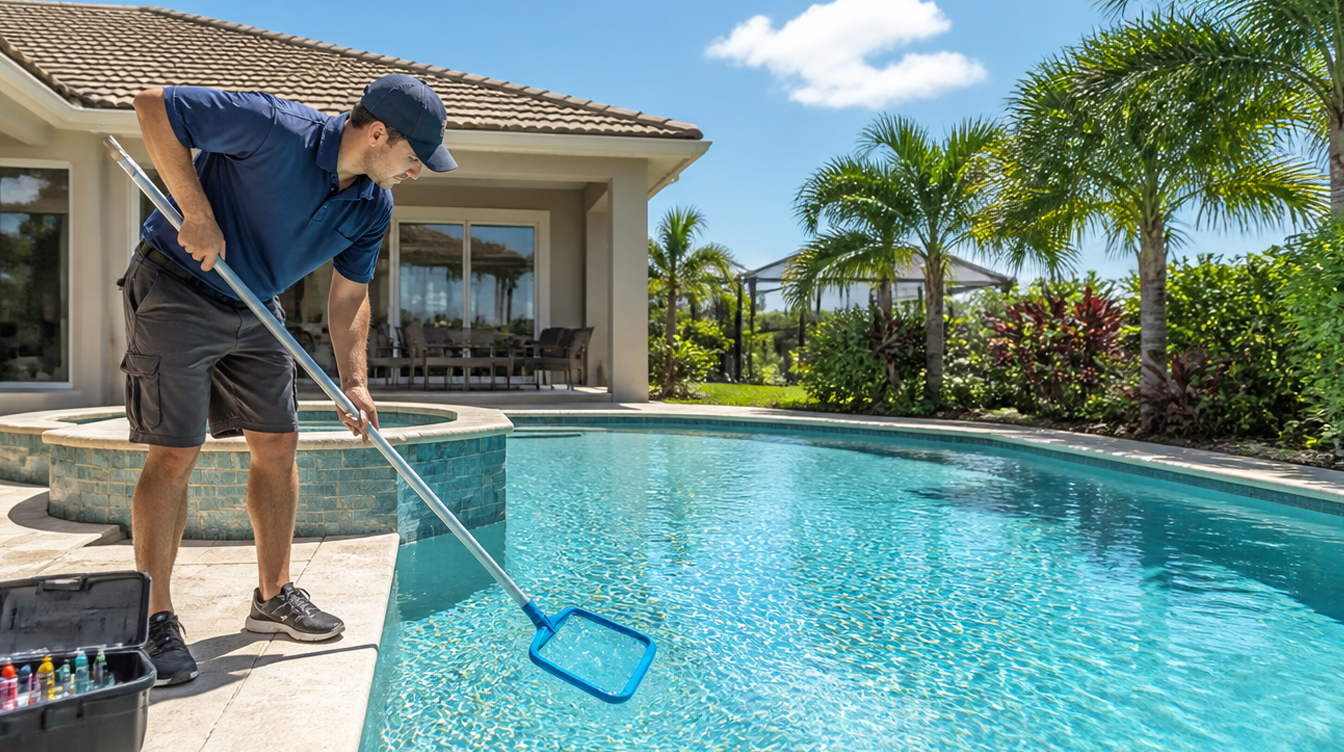
During a residential visit, a pool technician may test and adjust the water, empty baskets, brush surfaces, skim debris, vacuum as needed, inspect circulation, and look for signs of developing problems. A careful technician should also notice conditions that are easy for a homeowner to miss, such as a weakening pump seal, poor return flow, an unusual filter-pressure reading, early algae growth, air entering a suction line, or a slowly dropping water level.
Common residential service priorities include:
- Maintaining comfortable and properly sanitized water
- Keeping the pool floor, walls, tile, and waterline clean
- Monitoring pumps, filters, heaters, lights, and automation
- Identifying leaks or equipment concerns before they worsen
- Explaining basic pool operation to the homeowner
- Adjusting service after storms, parties, landscaping work, or extended travel
Residential customers may also need occasional pool education and operating guidance so they understand how to use automation, adjust schedules, recognize warning signs, and avoid accidentally damaging pool equipment.
Commercial Pool Service Requirements
Commercial pool service involves many of the same physical tasks as residential care, but the operational expectations are different. A commercial pool may serve dozens or hundreds of people at an HOA, apartment complex, hotel, school, fitness center, club, or other shared facility. This increased use places more demand on the water-treatment and circulation systems.
Commercial service may include chemistry monitoring, cleaning, preventive maintenance, operating logs, equipment-room inspections, controller calibration, emergency response procedures, and communication with property management. Depending on the facility, pool management services may also involve coordinating repairs, preparing for inspections, reviewing recurring operational issues, scheduling renovations, and helping management understand when the pool should be temporarily closed.
A commercial pool contractor must think beyond whether the water looks clear. Clear water can still have improper chemistry, inadequate circulation, or a developing equipment problem. A qualified pool specialist should evaluate the pool as a complete operating system rather than treating cleaning, chemistry, and pool equipment as unrelated tasks.
Health Department Regulations and Commercial Pool Maintenance
Florida distinguishes private residential pools from many pools serving shared residential, lodging, institutional, and public settings. State law broadly includes pools serving apartments, hotels, subdivisions, townhouses, mobile home parks, health spas, schools, and several other facilities within its definition of a public swimming pool, subject to specific definitions and exemptions. Property owners should confirm the classification of their facility rather than assuming that a pool is private simply because access is limited to residents or guests.
The Florida Department of Health’s public swimming pool program enforces sanitation and safety standards through operating permits and inspections administered through county health departments. Florida’s requirements are found in Chapter 64E-9 of the Florida Administrative Code, while Chapter 514 of the Florida Statutes addresses public swimming and bathing facilities.
These requirements can affect:
- Water quality and sanitation
- Safety equipment and pool supervision
- Operating permits and inspections
- Maintenance and operational records
- Equipment configuration and circulation
- Pool modifications, resurfacing, and construction work
- The qualifications of people responsible for certain service activities
The CDC Model Aquatic Health Code is another useful educational resource for aquatic facility operators. It is guidance rather than a single federal law, but it compiles public-health practices related to pool design, operation, management, water quality, and injury prevention. State and local requirements remain the controlling rules for a particular property.
Maintenance Frequency for Residential and Commercial Pools
Residential pools are commonly serviced weekly because usage is usually predictable and limited to the household. Between visits, the homeowner may empty a basket, check the water level, or remove storm debris. The right schedule still depends on tree coverage, pool size, swimmer use, equipment condition, water temperature, and whether the pool has features such as a spa, heater, salt system, or water feature.
Commercial pool maintenance may require attention more frequently than once a week. High bather loads can consume sanitizer more quickly and introduce sunscreen, body oils, dirt, and other contaminants. Commercial operators may also need to complete required checks and records between professional service visits. A hotel pool maintenance program during a busy holiday period, for example, may require a different approach than a lightly used community pool during the off-season.
Frequency should be based on operating conditions rather than a generic package. A pool professional should review:
- Average and peak bather loads
- Hours of operation
- Pool and spa volume
- Chemical-feeding method
- Filtration and circulation capacity
- Exposure to rain, heat, trees, and landscaping
- History of cloudy water, algae, or inspection concerns
- On-site staff responsibilities
Water Chemistry Management
Residential water chemistry is generally managed for sanitation, swimmer comfort, surface protection, and equipment longevity. The pool technician tests key water conditions and makes adjustments based on the pool’s treatment system, finish, fill water, weather, and usage.
Commercial water chemistry must respond to more frequent and sometimes unpredictable changes. A pool can be balanced early in the day and experience significantly different conditions after hours of heavy use. For that reason, commercial properties often benefit from properly maintained chemical feeders, controllers, circulation systems, and written procedures for responding to abnormal readings.
Chemical management should not become a cycle of adding products without diagnosing the cause. Repeated chlorine loss, unstable pH, recurring algae, scale, staining, or cloudy water may point to circulation problems, inaccurate testing, excessive stabilizer, contaminated filters, improper chemical feeding, or an equipment issue. In those situations, professional pool maintenance and system evaluation may be more useful than continuing to add chemicals.
A commercial pool may need to close when water clarity, sanitation, circulation, safety equipment, electrical conditions, or another operational issue creates a health or safety concern. The responsible operator should follow applicable regulations and professional guidance rather than waiting for the next scheduled service visit.
Many shared-use pools serving subdivisions, apartments, hotels, townhouses, and similar properties fall within Florida’s definition of a public swimming pool. However, definitions and exemptions can apply, so the property should confirm its status with the appropriate county health department.
Pool Equipment Demands
Residential and commercial pools use many of the same categories of equipment, including pumps, filters, heaters, sanitizing systems, lights, automation, and cleaners. The difference is often in equipment capacity, operating time, controls, serviceability, and the consequences of a failure.
A residential pump failure may inconvenience one household. A pump, controller, or chemical-feeding failure at an apartment or hotel can affect many users and may require the pool to be closed until safe operation is restored. Commercial systems may also have larger filters, higher-capacity pumps, automated chemical controls, multiple bodies of water, and more complicated plumbing.
Warning signs that should be evaluated include:
- Unusual pump or motor noise
- Loss of circulation or weak return flow
- Water leaking around equipment
- Rapidly changing chemical readings
- Cloudy water that returns after treatment
- Heater shutdowns or error codes
- Frequent controller alarms
- Corroded electrical or chemical components
- Filters requiring unusually frequent cleaning
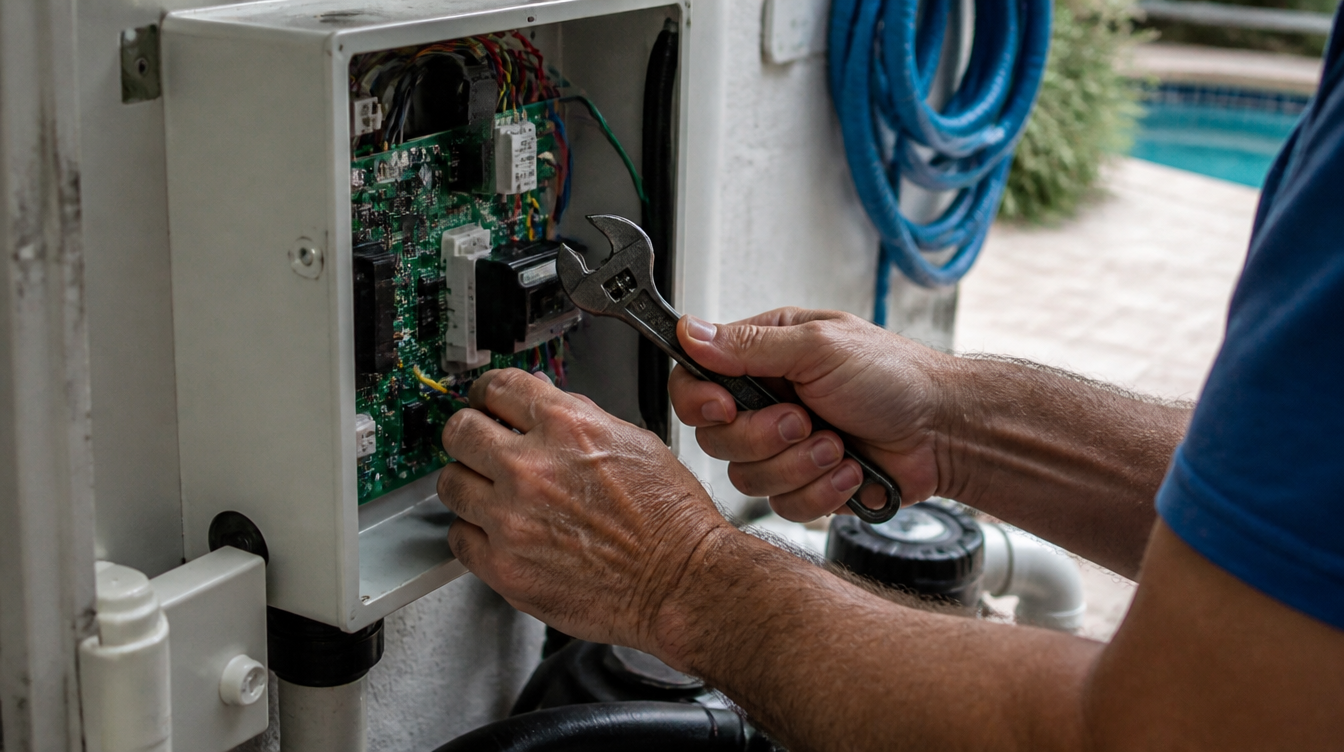
When these conditions appear, a qualified technician should inspect the system before a minor problem leads to downtime or equipment damage. Professional pool equipment installation and repair can also help determine whether an existing component should be repaired, replaced, resized, or integrated into an updated control system.
Liability Concerns for Commercial Pools
Liability is one of the most important differences between residential and commercial pool service. Commercial properties have a responsibility to maintain conditions for residents, guests, members, employees, and other authorized users. Poor water quality, broken safety equipment, slippery surfaces, inadequate visibility, damaged drain covers, unsecured chemical storage, or incomplete maintenance records can create serious concerns.
A maintenance company cannot eliminate every risk, and property management still has responsibilities between service visits. Therefore, the service agreement should clearly define who performs testing, who maintains records, who responds to alarms, who has authority to close the pool, and who contacts management when unsafe conditions are found.
Trustworthy pool management services should not promise that a property will never experience an equipment failure, inspection concern, or temporary closure. Instead, the goal should be to reduce preventable problems through consistent maintenance, documentation, communication, and timely repairs.
HOA Pool Maintenance, Apartment Pool Service, and Hotel Pool Maintenance
Although these properties all have shared pools, their operating needs are not identical.
HOA pool maintenance often involves predictable resident use, board-approved budgets, vendor reporting, scheduled access, and communication with a community manager. Older communities may also need long-term planning for resurfacing, plumbing repairs, accessibility improvements, or equipment modernization.
Apartment pool service may need to account for seasonal move-ins, resident events, children’s use, changing access conditions, and communication among property managers, maintenance employees, and outside vendors. Service responsibilities should be documented so essential tasks are not assumed to be someone else’s job.
Hotel pool maintenance can be particularly demanding because the pool affects guest experience and may be used throughout the day by people unfamiliar with the property. Hotels may need dependable response procedures, close coordination with engineering staff, and careful planning when repairs or renovation work could affect occupancy or amenities.
Pool Inspections, Consulting, Renovation, and Construction
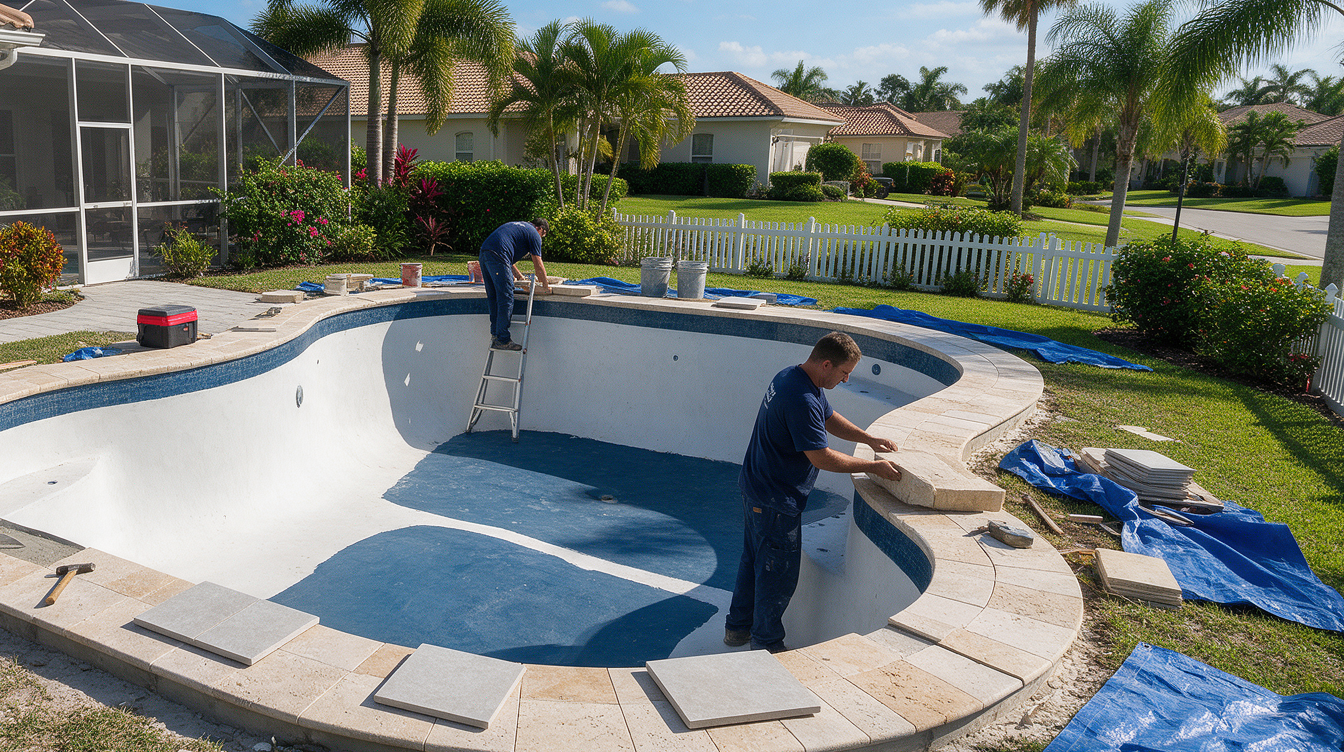
Routine maintenance cannot correct every problem. Older commercial and residential pools may have worn finishes, failing tile, damaged coping, outdated equipment, poor circulation, leaks, or layouts that no longer meet the property’s needs. In these cases, the pool contractor may recommend a more detailed inspection or consultation.
Pool inspections and pool consulting can help establish the condition of the vessel, deck, equipment, plumbing, safety components, and operating system before a purchase, renovation, or service transition. When larger improvements are needed, coordinated pool renovation and construction services can address resurfacing, tile, coping, decking, equipment upgrades, automation, and other facility changes.
Commercial renovation requires additional planning because the property may need to coordinate permits, inspections, resident or guest notifications, contractor access, shutdown periods, material lead times, and reopening procedures.
What Affects Cost, Complexity, and Service Results?
There is no single price or maintenance plan that applies to every residential or commercial pool. Final pricing, timing, and results depend on the property, provider, system condition, and required scope.
Important cost and complexity factors include:
- Pool and spa size
- Residential versus shared commercial use
- Number of weekly or daily visits
- Bather load and operating hours
- Existing water conditions
- Age and condition of the pool equipment
- Filter type and chemical-treatment system
- Accessibility of the pool and equipment room
- Required operating logs and management reporting
- Need for emergency or after-hours service
- Local permits, inspections, or compliance work
- Leak detection, repairs, renovation, or replacement parts
- Custom water features, heaters, spas, and automation
- Staff training and follow-up support
A lower service price may reflect fewer visits, fewer included tasks, limited reporting, or separate charges for chemicals and repairs. Property owners should compare the actual scope rather than relying only on the monthly total.
Choosing a Qualified Commercial Pool Company in Florida
Choosing a commercial provider requires more than searching for a pool guy who can clean the water. Commercial properties should look for a company that understands the relationship between chemistry, filtration, circulation, safety, equipment, documentation, and regulatory requirements.
Ask prospective providers:
- What types of commercial properties do you regularly service?
- How do you document visits, readings, and equipment concerns?
- Who is responsible for checks between service visits?
- How are urgent water-quality or equipment problems communicated?
- Can you support pumps, filters, heaters, controllers, and chemical feeders?
- How do you prepare for inspections or respond to deficiencies?
- What services are included, excluded, or billed separately?
- Can you coordinate maintenance with renovation and equipment work?
- What happens when the pool should not remain open?
A qualified provider should be willing to inspect the property before recommending a schedule. The right commercial pool service should be based on the actual pool system and facility demands, not simply a residential maintenance checklist applied to a larger pool.
When to Contact a Qualified Pool Professional
Contact a pool professional when the water becomes cloudy, green, unusually irritating, or difficult to balance; when circulation stops; when equipment is leaking or making abnormal noises; or when electrical components, heaters, chemical feeders, drain covers, or safety equipment may be involved.
Commercial operators should also seek professional help when records show recurring chemistry problems, the pool fails an inspection, an alarm continues to return, or management is uncertain whether the facility should remain open. Avoid entering flooded equipment rooms, handling unfamiliar chemical systems, mixing pool products, or working on powered equipment without the appropriate knowledge and safeguards.
Residential and Commercial Pool Service Require Different Strategies
Residential and commercial pools share the same basic need for clean water, dependable circulation, effective filtration, and functional equipment. The main difference is the level of use, oversight, documentation, regulation, and responsibility surrounding the pool.
Homeowners usually need consistent weekly care and straightforward communication about their pool’s condition. Commercial properties need a structured operating plan that connects maintenance, water chemistry, equipment, inspections, staff responsibilities, and long-term facility planning. Understanding that difference makes it easier to hire the right pool technician, pool builder, consultant, or commercial pool contractor for the property.
Property owners who need help evaluating an existing pool, comparing service options, or planning repairs can contact a pool professional for a property-specific assessment.