A pool can look perfectly clear while its equipment is beginning to struggle behind the scenes. A pump may be pulling in small amounts of air, a filter may be operating at higher-than-normal pressure, or a heater may be repeatedly shutting down because it is not receiving enough water flow. These issues often begin as minor inconveniences, but they can eventually lead to cloudy water, inconsistent sanitation, higher energy use, water loss, or a complete equipment shutdown.
In Boca Raton, pool equipment often operates throughout most of the year. Frequent use, heavy rainfall, landscaping debris, heat, humidity, and changing water chemistry can place additional strain on pumps, filters, heaters, salt systems, and electronic controls. Understanding the early warning signs allows homeowners, property managers, and commercial facility operators to address problems before they affect the entire pool system.
What Boca Raton Pool Owners Should Know First About Pool Equipment Repair
The most common pool equipment problems involve poor water circulation, clogged or damaged filters, heater ignition or flow issues, salt chlorine generator failures, and communication problems within pool automation systems. Many of these problems can be prevented through consistent cleaning, balanced water chemistry, routine inspections, and prompt attention to unusual noises, leaks, error messages, or changes in water flow.
Not every equipment problem requires immediate replacement. A pool technician may be able to correct the issue by clearing an obstruction, replacing a seal or sensor, repairing a connection, adjusting system settings, or cleaning a component. However, the appropriate solution depends on the equipment’s age, condition, compatibility, accessibility, and repair history. Costs and timelines also vary based on the specific system, replacement parts, labor requirements, urgency, and whether additional problems are discovered during the inspection.
Pool Pump Repair: Why Pumps Lose Flow or Stop Working
The pool pump is responsible for moving water through the filter, heater, sanitizer, and return lines. When circulation weakens, nearly every other part of the system can be affected. Common signs of a pump problem include low return-jet pressure, air bubbles entering the pool, loud grinding or humming noises, water leaking around the equipment pad, or a pump that loses prime after shutting off.
Some pump failures are caused by relatively simple conditions. The pool water may be too low, the skimmer or pump basket may be clogged, a valve may be partially closed, or a pump-lid gasket may no longer form a proper seal. Other problems can involve worn bearings, a damaged impeller, electrical components, motor failure, plumbing leaks, or an improperly sized pump.
A qualified provider offering pool equipment installation and repair should evaluate the entire circulation path instead of replacing the motor or pump based on one symptom. For example, installing a new pump will not correct low flow if the actual cause is a blocked suction line or severely restricted filter.
When replacement becomes necessary, the pump should be selected based on pool volume, plumbing configuration, attached water features, filtration requirements, and operating schedule. The U.S. Department of Energy provides information about efficiency standards for dedicated-purpose pool pumps, which can be useful when comparing modern equipment and variable-speed options.
Pool Filter Replacement and Common Filtration Problems
A pool filter removes debris and small particles from circulating water. Depending on the system, the pool may use a cartridge, sand, or diatomaceous earth filter. Although each type operates differently, all filters can develop restricted flow when they become dirty, damaged, incorrectly assembled, or overdue for service.
A rising pressure gauge is one of the most common signs that a filter needs attention. However, pressure readings should be compared with the system’s normal clean operating pressure rather than judged by one universal number. Low pressure can also indicate a problem, including insufficient water entering the pump, a blocked basket, a suction leak, or a malfunctioning pressure gauge.
Common filter issues include:
- Dirty or oil-coated cartridge elements
- Torn filter grids or damaged cartridges
- Channeling or deteriorated media in sand filters
- Leaking tank O-rings or drain plugs
- Damaged pressure gauges or air-relief assemblies
- Incorrectly positioned valves
- Cracked filter tanks or worn internal components
Filter tanks operate under pressure and should never be opened while the pump is running or while pressure remains inside the system. Manufacturer guidance, such as Pentair’s pool filter safety and support information, emphasizes shutting down the equipment, preventing unexpected pump activation, and properly relieving pressure before servicing a filter.
A pool filter replacement may be appropriate when the tank is cracked, replacement parts are no longer available, internal damage is extensive, or the existing filter is undersized for the pool. Before replacing it, a pool specialist should also determine whether poor water clarity is actually related to filtration, circulation time, water chemistry, algae, or another underlying condition.
Pool Heater Repair Near Me: Common Heater Malfunctions
Pool heaters may fail to start, shut down shortly after ignition, display an error code, or run without warming the water effectively. Although the heater receives most of the attention when this happens, the cause may originate elsewhere in the pool system.
Many heaters require a minimum level of water flow before they will operate. A dirty filter, clogged basket, closed valve, low pump speed, blocked heat exchanger, or malfunctioning flow switch may prevent the heater from starting. Other potential causes include ignition problems, sensor failures, electrical issues, gas-supply concerns, corrosion, damaged wiring, or improper automation settings.
Homeowners searching for “pool heater repair near me” should look for a pool professional who evaluates both the heater and the circulation system. Repeatedly resetting a heater without identifying the cause can allow the underlying condition to worsen.
Gas, electrical, and combustion-related repairs should not be treated as routine do-it-yourself projects. The equipment should be shut down when there is a gas odor, visible scorching, unusual exhaust, water leaking from the heater, repeated breaker trips, or persistent error codes. A qualified technician can then determine whether the problem involves the pool system, the heater itself, or a utility connection requiring another licensed trade.
Salt System Problems and Chlorine Generator Issues
A saltwater pool still relies on chlorine for sanitation. Instead of adding all chlorine manually, the salt chlorine generator converts dissolved salt into chlorine as water passes through the cell. When the system is not operating correctly, the pool may develop low chlorine levels even though the control panel appears to be running.
Salt system warnings may be caused by low water temperature, incorrect salt readings, scale buildup on the cell, insufficient flow, aging cell plates, damaged sensors, wiring problems, or improperly balanced water. A “low salt” message does not always mean more salt should immediately be added. If the sensor or cell is producing an inaccurate reading, adding salt without confirming the actual level can create a different water-balance problem.
A pool technician should compare the system reading with an independent water test, inspect the cell, verify flow, and review the equipment’s output settings. The system should also be sized appropriately for the pool and expected demand. Commercial pools, frequently used residential pools, spas, and pools exposed to heavy rainfall or high swimmer loads may require closer monitoring.
Routine residential pool service can help identify declining chlorine production before the water becomes cloudy or develops algae. For larger shared facilities, scheduled commercial pool service should include documented water testing, equipment observations, and timely follow-up on warning messages.
Restricted water flow is one of the most frequently encountered problems. It may result from clogged baskets, a dirty filter, low water level, blocked plumbing, air leaks, incorrect valve positions, or a pump problem.
Warning signs include weak circulation, air bubbles, failure to prime, leaking water, unusual noises, frequent shutdowns, or a motor that hums without starting. A technician should inspect the entire circulation system before determining that the pump itself has failed.
Equipment should be observed during routine service visits and inspected whenever performance changes. Older systems, commercial pools, heavily used pools, and equipment with a history of repairs may require closer monitoring.
Pool Automation Systems: Troubleshooting Controls, Sensors, and Connectivity
Pool automation systems can control pumps, heaters, lights, sanitizing equipment, valves, water features, and operating schedules. When the automation system develops a problem, several pieces of equipment may appear to fail at the same time even though the individual components are still functional.
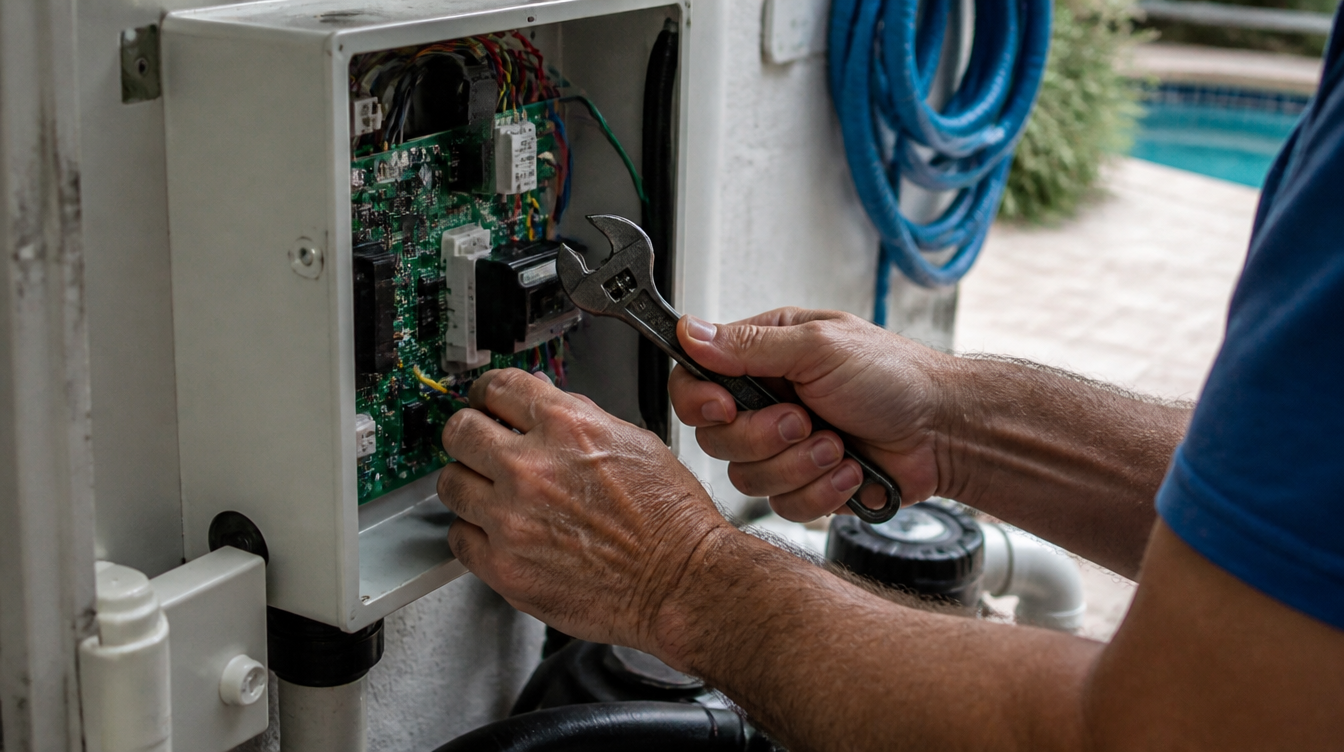
Common automation problems include incorrect schedules, lost Wi-Fi connections, outdated settings, faulty temperature sensors, failed relays, damaged communication wiring, tripped breakers, power-surge damage, and components that are not communicating with the main control panel. Another frequent situation occurs after equipment replacement: the new pump, heater, or salt system operates independently but has not been properly configured within the existing automation platform.
Before changing settings, pool owners should record existing schedules and equipment assignments. Randomly resetting controllers, changing wiring, or repeatedly cycling breakers can make diagnosis more difficult. A pool specialist familiar with both the equipment and the automation platform can check whether the problem is electrical, mechanical, software-related, or simply a programming issue.
In South Florida, it is also sensible to inspect automation and control equipment after major storms or power interruptions. Even when the system turns back on, schedules, clocks, communication settings, or protective components may need attention.
Preventative Maintenance Tips for Residential and Commercial Pool Service
Preventative maintenance focuses on identifying changes before they become major failures. A dependable pool guy or pool technician should not only clean the pool and test the water; the service visit should also include observations of circulation, equipment noise, leaks, pressure, and operating conditions.
Helpful preventative steps include:
- Keep pool water at the proper operating level.
- Empty skimmer and pump baskets before they become packed with debris.
- Monitor filter pressure and learn the system’s normal clean reading.
- Maintain balanced water chemistry to reduce scale and corrosion.
- Inspect the equipment pad for drips, rust, moisture, or damaged wiring.
- Keep plants, mulch, leaves, and stored items away from the equipment.
- Review pump, heater, and automation schedules periodically.
- Address recurring error messages instead of repeatedly clearing them.
- Arrange pool inspections before purchasing a property or renovating an older pool.
- Keep records of equipment models, repairs, replacement dates, and recurring problems.
Consistent pool maintenance is especially important when a property is vacant, used seasonally, or managed by multiple people. Without clear records, one person may adjust settings or add chemicals without knowing what another person has already done.
Documentation is also important for public and commercial pools. The CDC recommends recording water-testing results, equipment maintenance, and repairs as part of operating and managing public aquatic facilities.
When Pool Equipment Repairs Become Replacements
Repair is often appropriate when the equipment is otherwise in good condition and the problem involves an accessible, replaceable component. Examples may include seals, gaskets, sensors, gauges, capacitors, switches, or certain control components. However, repeated repairs can become less practical when major components are deteriorating or the equipment no longer performs reliably.
Replacement may deserve consideration when:
- The equipment has extensive corrosion or structural damage.
- A pump motor or heater continues failing after previous repairs.
- Replacement parts are unavailable or no longer supported.
- The equipment is improperly sized for the pool.
- A filter tank is cracked or otherwise unsafe.
- The system is incompatible with newer controls or equipment.
- Repair costs are substantial relative to the equipment’s condition.
- Energy use, noise, or performance remains poor after service.
- A renovation is changing the pool’s circulation requirements.
New pool equipment installation should account for how all components work together. Adding a larger pump, for instance, may affect filter pressure, plumbing velocity, heater flow, energy use, and automation settings. During a larger pool renovation or construction project, the pool contractor should evaluate the complete hydraulic and electrical system rather than selecting each component separately.
What Affects Pool Equipment Repair Cost, Complexity, and Timeline?
Pool equipment repair costs and timelines vary because the visible symptom may not reveal the actual cause. A pump that will not start could have a simple control-setting issue, an electrical problem, a failed motor, or multiple contributing conditions.
Factors that can affect the project include:
- Type, brand, model, and age of the equipment
- Availability of replacement parts
- Accessibility of the equipment pad
- Existing plumbing and electrical configuration
- Severity of corrosion, leakage, or internal damage
- Compatibility with automation systems
- Need for new valves, wiring, breakers, plumbing, or controls
- Emergency or after-hours service requirements
- Diagnostic time needed to reproduce an intermittent problem
- Commercial operating requirements and documentation
- Local code, permit, or inspection requirements
- Additional damage caused by delayed maintenance
Commercial projects may involve more coordination than residential repairs because downtime can affect residents, guests, tenants, or facility operations. The Florida Department of Health’s public swimming pool resources explain that public pool equipment, construction, operation, and water quality are governed by applicable state rules and building requirements. Palm Beach County also reports that licensed public pools are routinely inspected, with inspectors reviewing sanitation, equipment, safety items, and maintenance records.
When to Contact a Qualified Pool Professional
Basic tasks such as emptying baskets, checking the water level, observing the pressure gauge, and reviewing the controller display can help a pool owner identify a problem. However, a qualified pool professional should be contacted when the issue involves electricity, gas, pressurized filter components, internal pump repairs, structural equipment damage, persistent leaks, or repeated system shutdowns.
Stop operating the equipment and request professional swimming pool repair services when you notice:
- A burning smell, smoke, sparks, or scorched wiring
- Breakers that repeatedly trip
- Gas odors or abnormal heater exhaust
- A cracked or leaking pressurized filter tank
- Water reaching electrical equipment
- Loud grinding, screeching, or metal-on-metal sounds
- A pump running without water
- Major plumbing leaks
- Recurring heater, salt, or automation error codes
- Loss of circulation that affects sanitation
Prompt diagnosis protects more than the failed component. Because pool equipment operates as a connected system, continuing to run one damaged part may place additional stress on pumps, heaters, filters, plumbing, or controls.
Choosing a Pool Repair Company in Boca Raton
A reputable pool repair company in Boca Raton should begin with diagnosis rather than immediately recommending the most expensive replacement. Ask what was inspected, what caused the problem, whether other components contributed to it, and what maintenance may help prevent it from returning.
It is also helpful to choose a pool specialist who can support the complete system. A company experienced in pool equipment, pool inspections, pool consulting, residential pool service, commercial pool service, renovation, and ongoing maintenance can evaluate how one repair may affect the rest of the pool.
Before authorizing work, request a clear explanation of the proposed repair or replacement, expected limitations, equipment compatibility, and any follow-up maintenance. Pool owners who need help diagnosing an equipment problem can contact a pool professional to arrange an evaluation.